Designing a diagnostics workflow for natural language models
Designing a diagnostics workflow for natural language models
Overview
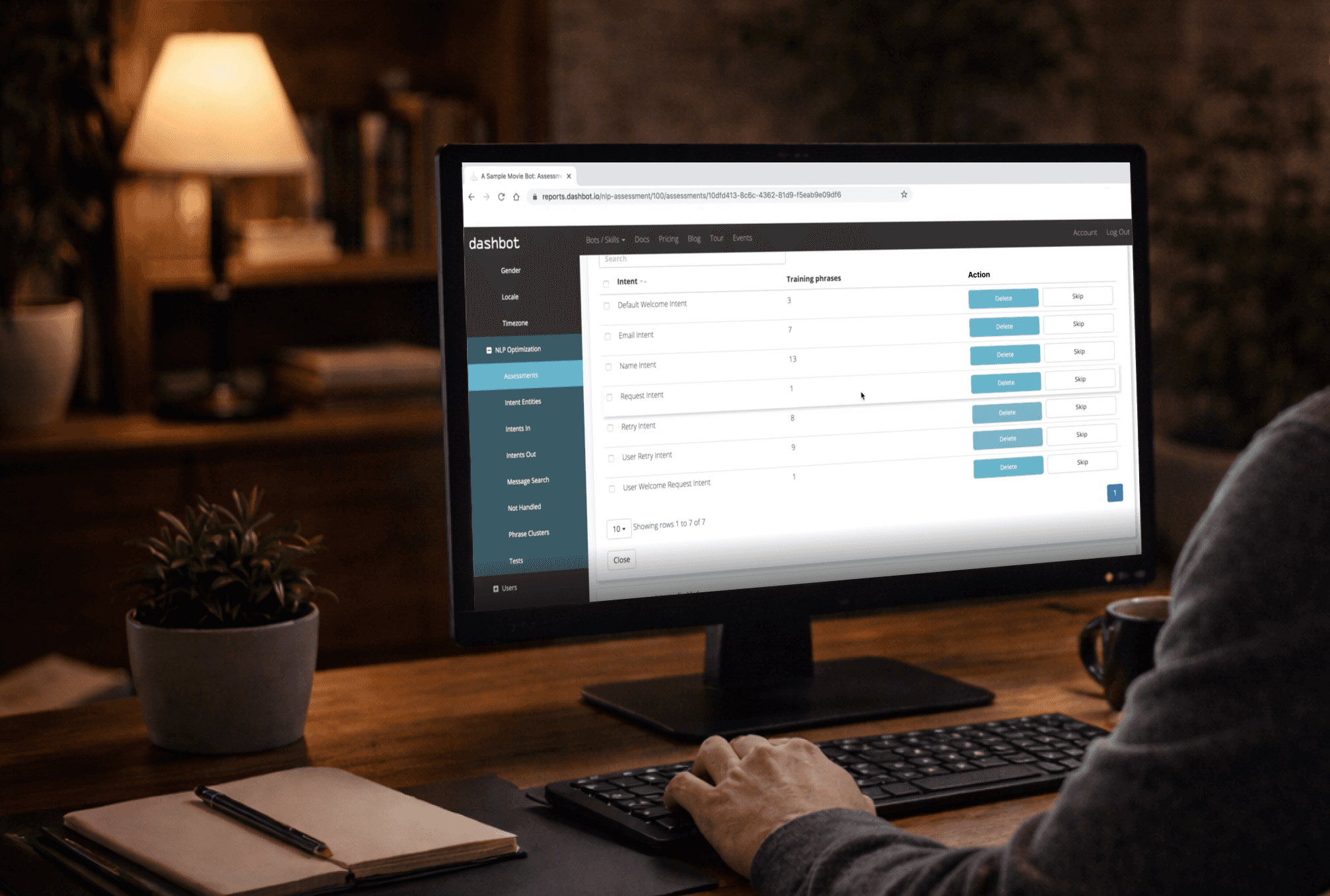
The fluid nature of human conversations makes chatbot and voice experiences hard to design. Many bots are built with Natural Language Processing (NLP) technology that helps them respond flexibly to human messages. Even so, bots often fail to anticipate human requests, frustrating users. Chatbot and voice teams dealing with conversations at scale spend hours manually poring through users’ transcripts and spreadsheets to find and correct these instances of failure.
Starting fall 2019, I led the design of a new feature helping teams find and fix NLP problems within the Dashbot platform. I worked with product, data scientists, engineers to identify opportunities for mutual user and business wins, scope the project, architect the flow, and design and implement the recommendations feature.
Company
Dashbot
Timeline
2019
Role
Lead Designer
Impact
Shortened time-to-value by 2x.
Impact
Five customers upsold
Overview
The fluid nature of human conversations makes chatbot and voice experiences hard to design. Many bots are built with Natural Language Processing (NLP) technology that helps them respond flexibly to human messages. Even so, bots often fail to anticipate human requests, frustrating users. Chatbot and voice teams dealing with conversations at scale spend hours manually poring through users’ transcripts and spreadsheets to find and correct these instances of failure.
Starting fall 2019, I led the design of a new feature helping teams find and fix NLP problems within the Dashbot platform. I worked with product, data scientists, engineers to identify opportunities for mutual user and business wins, scope the project, architect the flow, and design and implement the recommendations feature.
for the full case study