Reimagining a low-code app for building AI assistants
Overview
Company
ServiceNow
Timeline
February - November 2022
Team
Product, development, research, content design, AI research, design systems, other cross-functional teams
My Role
Staff Product Designer and Lead Designer
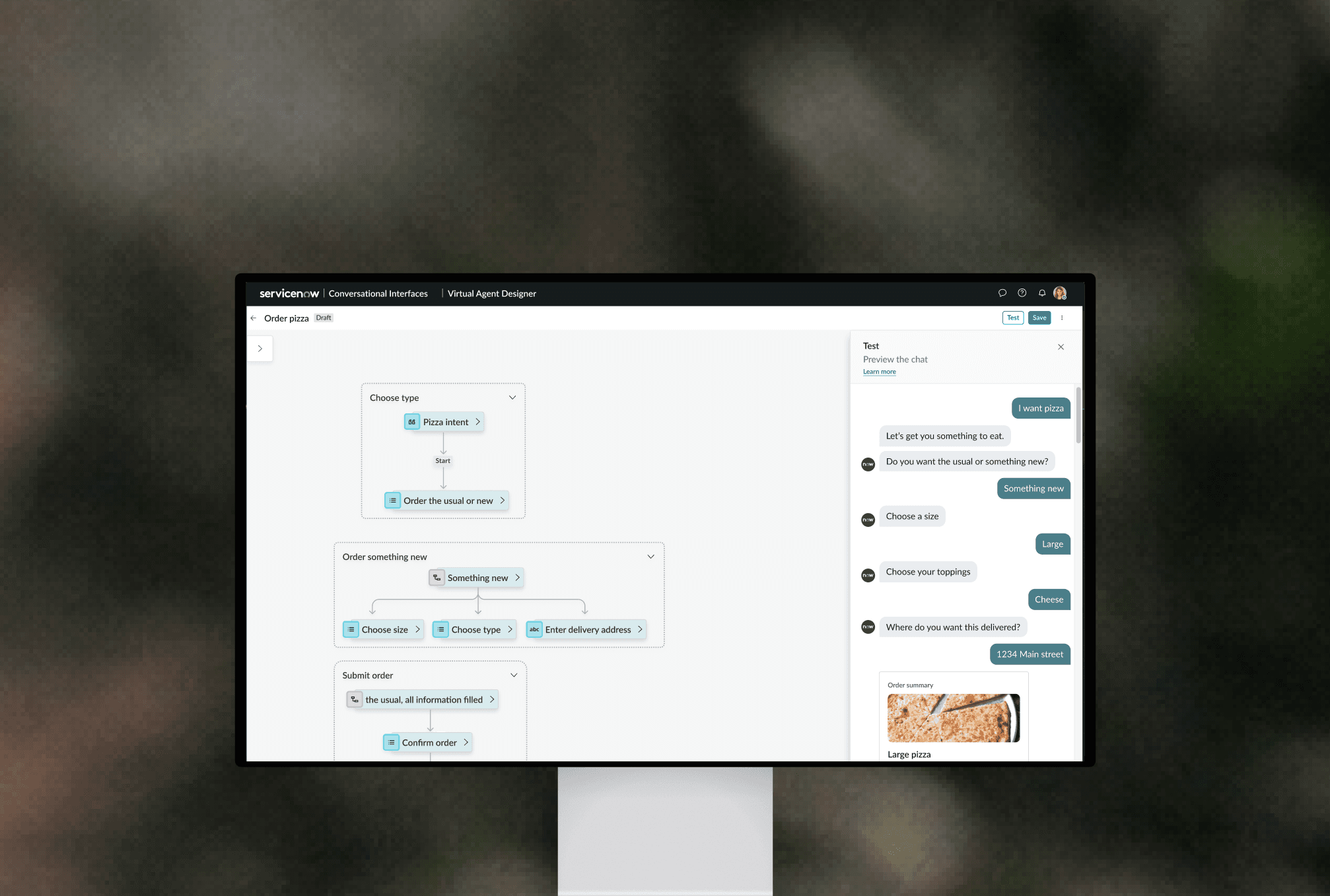
ServiceNow’s Virtual Agent Designer (VAD) helps large enterprise customers build chatbots to resolve internal workflows like IT requests and HR issues.
Three years after launch, adoption remained low with only ~19% of customers who had access actively using the tool.
Over eight months, I led a redesign for the VA Designer experience, integrating workflows across four previously siloed product areas: Virtual Agent Designer, NLU Workbench, Virtual Agent Admin, and Virtual Agent Analytics. I partnered with research to diagnose the adoption problem, facilitated cross-team workshops to align stakeholders around a unified vision, and led the design and delivery of the new experience.
These efforts boosted activation and confidence among early users, helping unlock broader adoption while positioning VAD for future GenAI initiatives.
Challenge
Business Goals
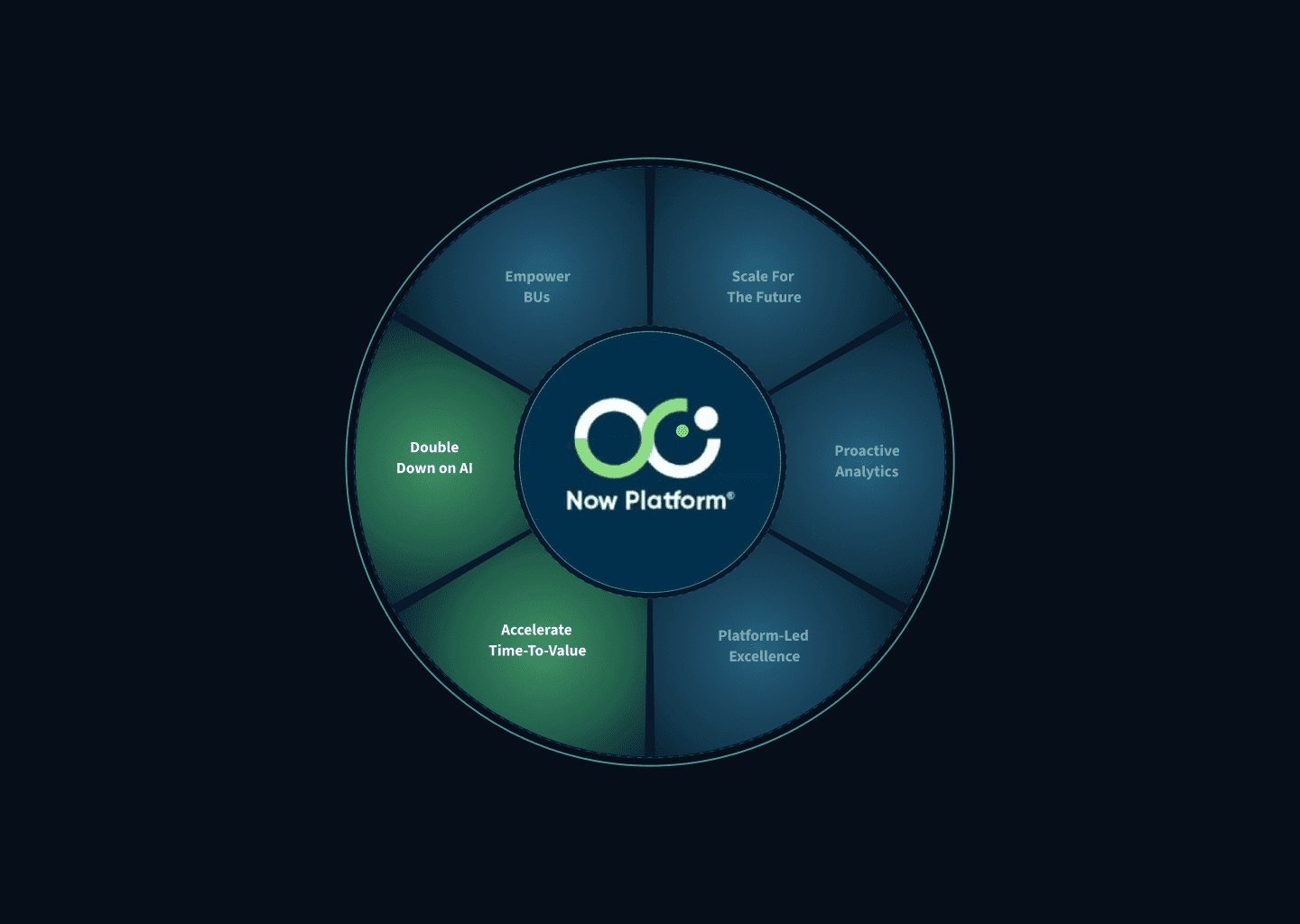
In 2022, ServiceNow leadership aimed to deepen investment in AI and accelerate customer time-to-value across the platform.
Virtual Agent Designer was expected to play a key role in this strategy.
Product Problem
Despite these ambitions, adoption remained low among customers who had turned on Virtual Agent Designer.
User research showed that customers took over 2 weeks to see time-to-value.
Organizational Constraints
Ownership of the end to end experience also overlapped between two teams: Virtual Agent Designer and the AI team (NLU Workbench).
I was brought in from the AI side to help bridge the two teams.
Approach
Near-term
To learn the team dynamics and language, I invested time in one-on-one conversations with VA Designer engineering and product leads, identifying team values and contributing to ongoing feature work. This established rapport and built shared context around the product.
Future
While building this foundation, I advocated to include Virtual Agent Designer in a leadership-commissioned research initiative, then partnered with the research lead to design the study, interviewing users across 11 customers to understand existing behavior and pain points. I invited eng and product leads to sit in on these sessions.
Discovery
Research surfaced a behavioral divide between power users (typically developers) and first time users (typically Citizen Developers), where developers took on more work due to the technical and fragmented nature of the experience. The hurdle to adoption wasn't the tool's capabilities, but the existing cliff in learning how to use the tool for the first time.



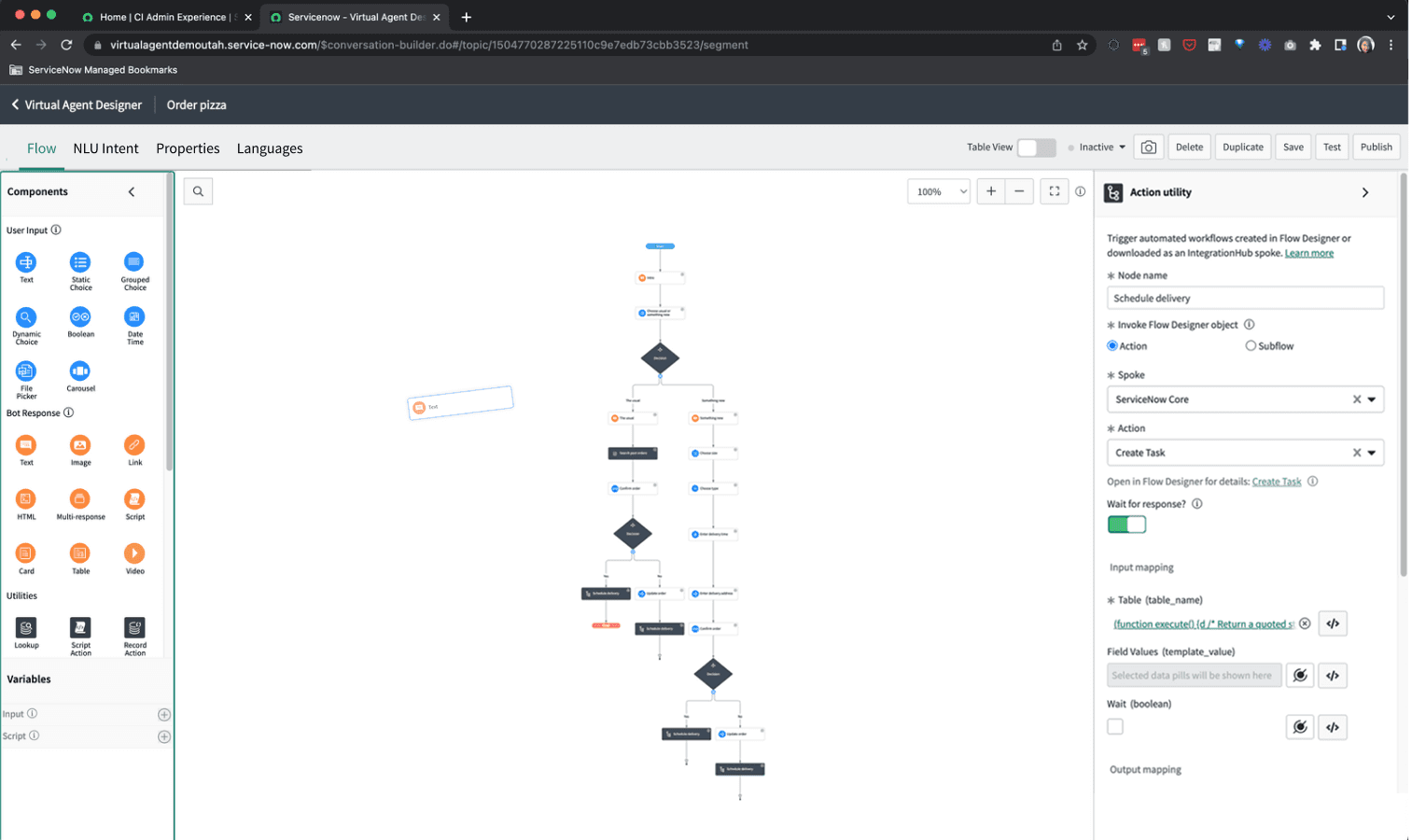
Product: Virtual Agent Designer (VAD)
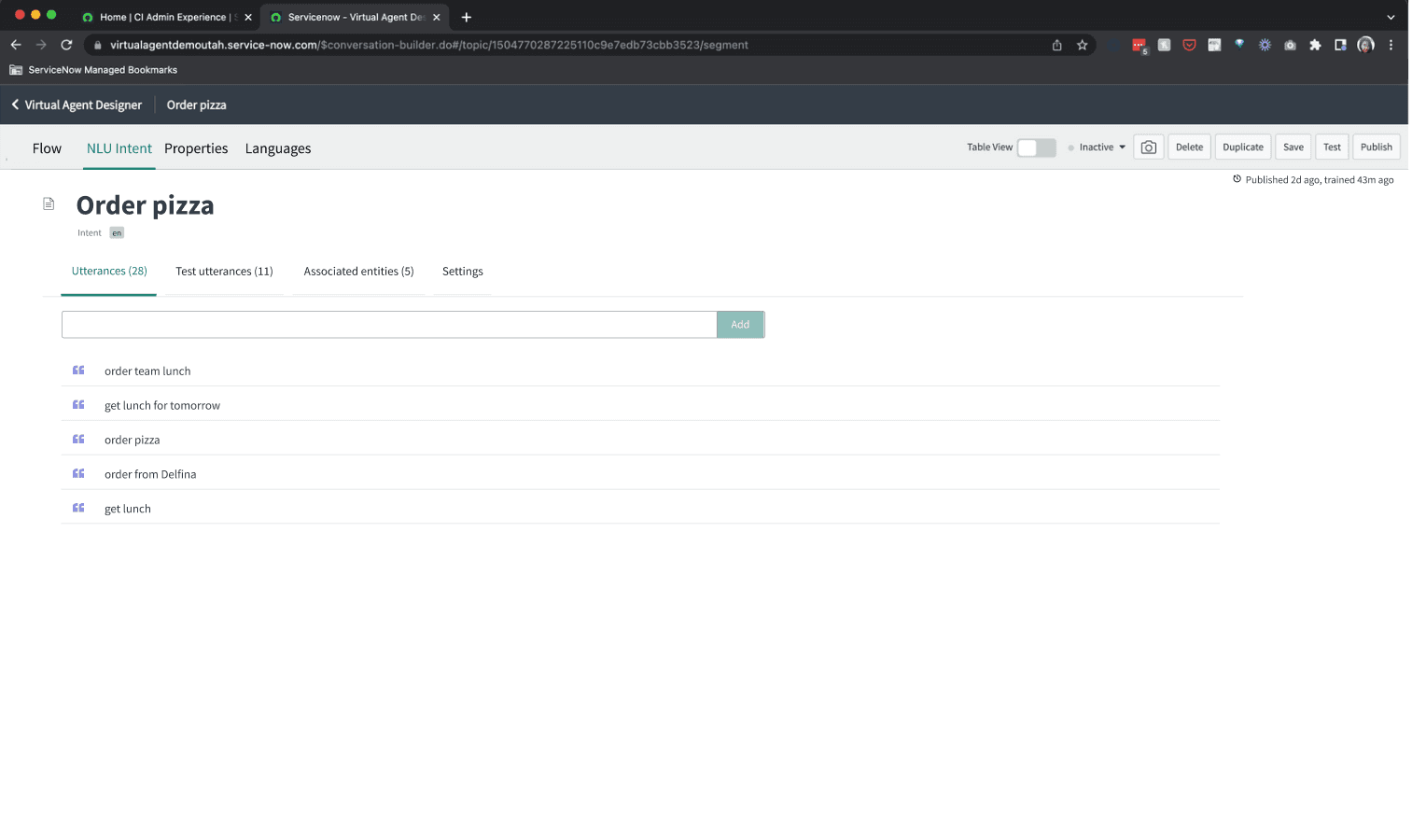
Product: Natural Lanugage Understanding Workbench (NLUWB)
A key barrier to "crawling" lived within the VA Designer tool itself, which required Citizen Developers to traverse two tabs in order to build one workflow. This required them to learn disparate concepts and map them back to each other, ultimately leading to slow time-to-value.
VIsion
Crawl, walk, run
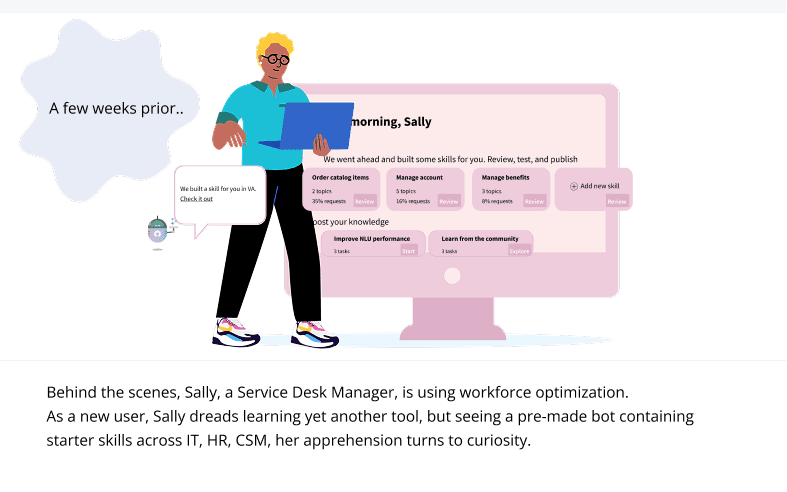
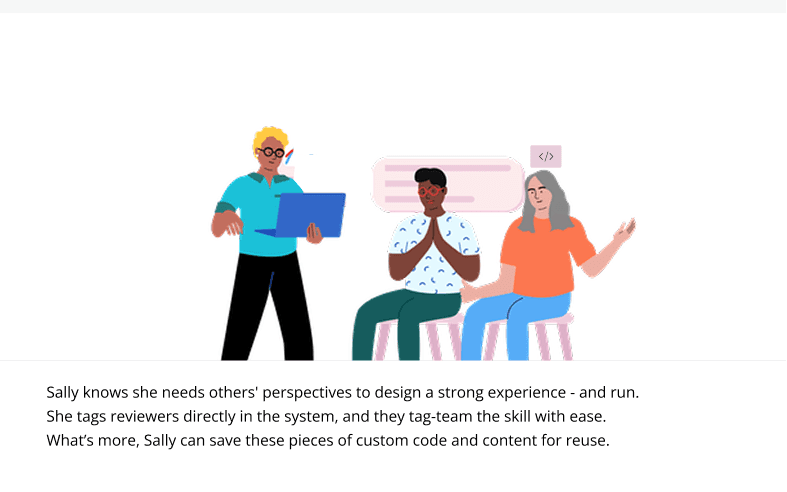
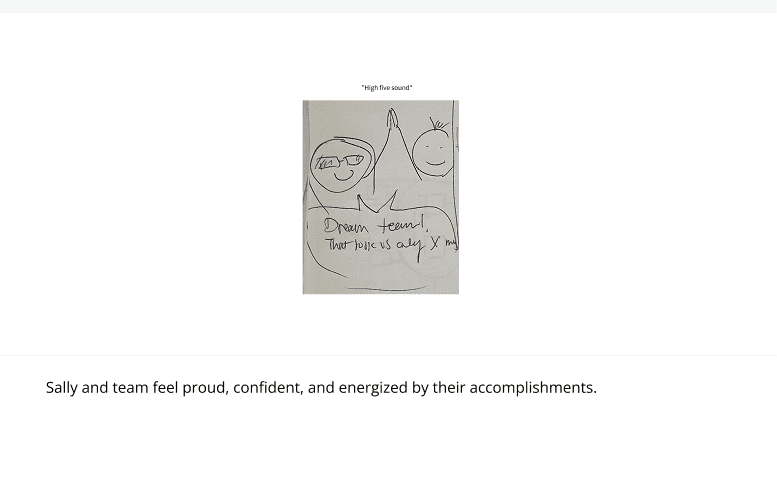
To drive alignment around the problem, I led a two-day vision workshop to align around the reframed problem and the target user (Citizen Developers) with leads from VA Designer, NLU Workbench, UX Research, and subject matter experts from adjacent teams.
These efforts led the teams to prioritize helping Citizen Developers crawl. To do this, they rallied around a vision for a simpler, cohesive experience. The workshops led to concrete commitments from product to put dev and design resources towards building this experience.
The MVP
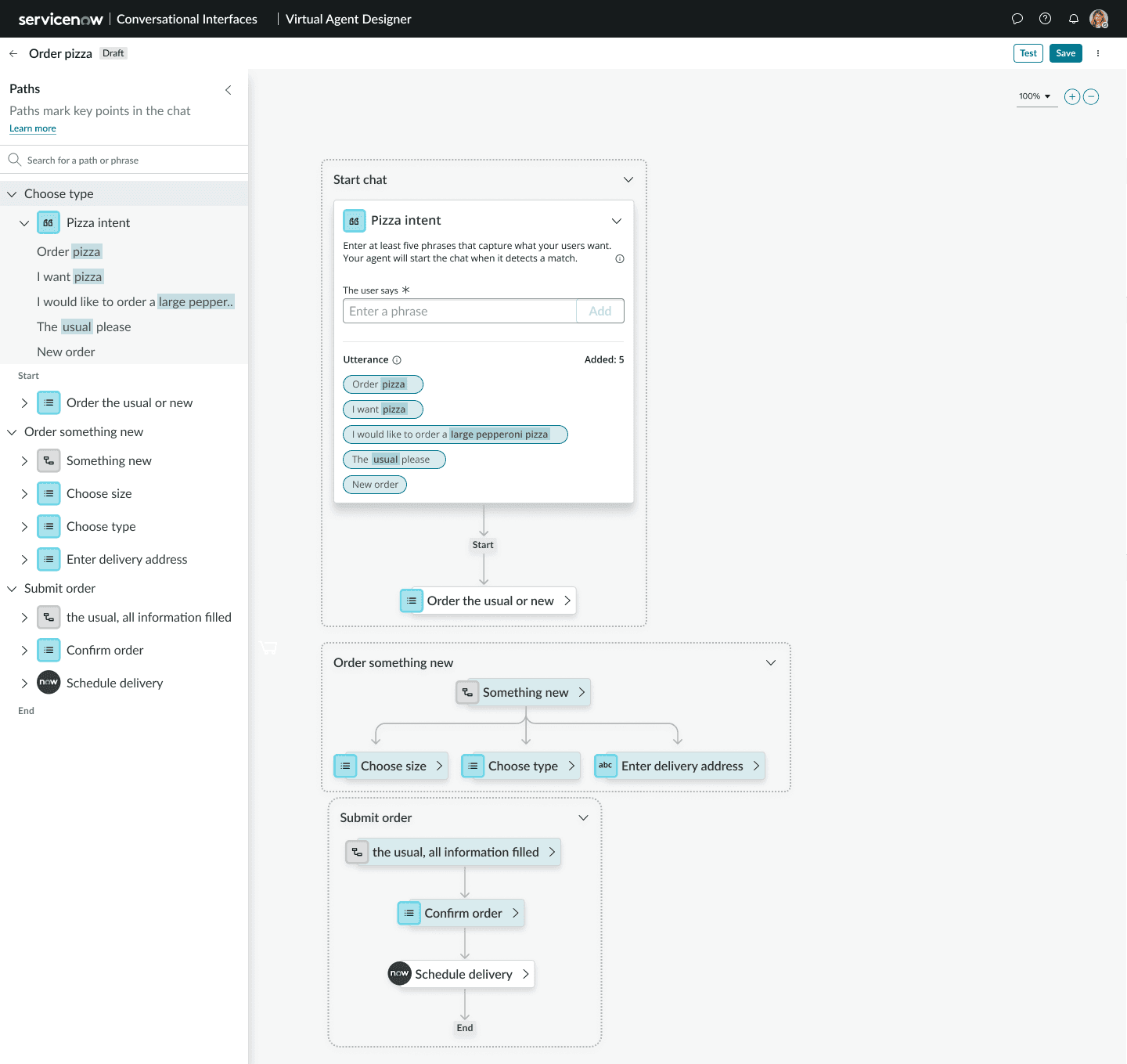
Key solution features
Citizen Developers build, test, and deploy in one place, where previously they traversed multiple products and learned complex concepts to build one workflow.
Key technical AI concepts abstracted via integrated experience
Auto-mapping within VA Designer helps trigger actions within NLU Workbench behind the scenes
Content geared towards Citizen Developers with tooltips to guide
Iterations
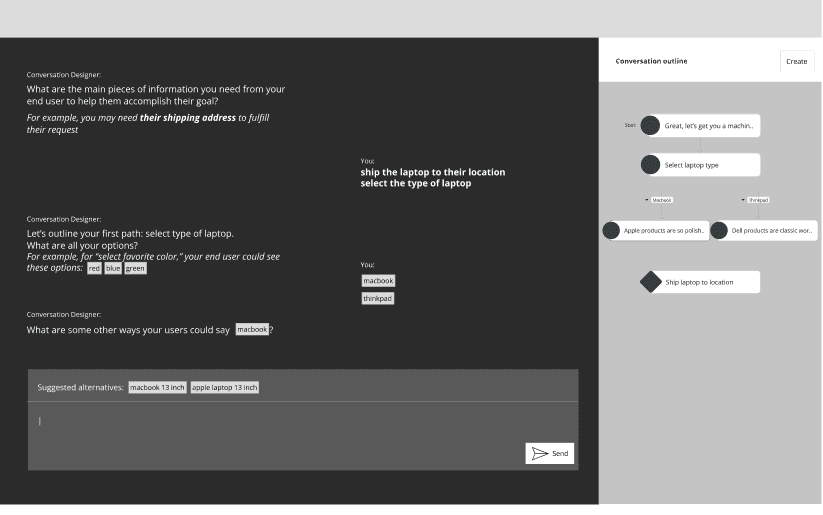
Initially, I explored using natural language to build flows conversationally, describing intent rather than constructing logic node by node. It was parked early; the technical feasibility wasn't there yet relative to the flow diagram approach.
The concept didn't disappear. It resurfaced later as the basis for Virtual Agent Designer's role in a future LLM-powered initiative.
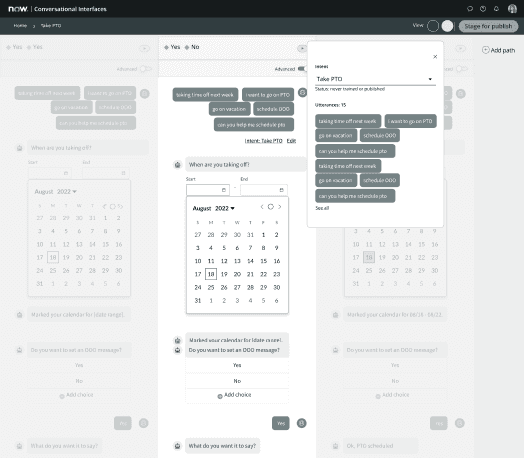
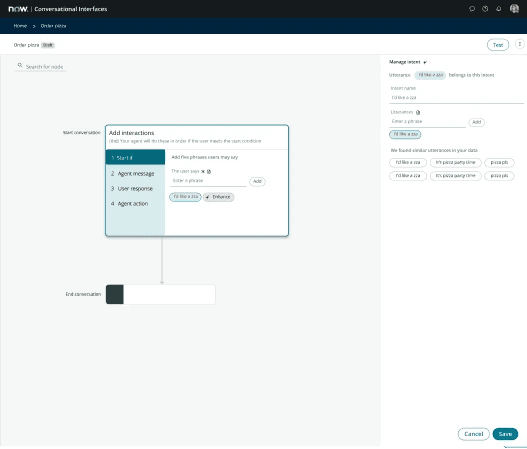
Another key concept explored editing fields directly within the flow diagram in order to highlight the end experience.
I partnered with UX Research to evaluate this approach with Citizen Developers via usability testing.
Findings showed that users preferred to edit within one experience instead of in two (canvas and left panel), which led to the final iteration of the MVP.
Impact
Users completed core workflows (create, test, publish) two times faster than the previous experience
91% of participants who previously avoided AI configuration found the new experience easier to use
83% felt confident building scalable assistants after using the redesigned experience
19% of previously inactive accounts entitled to Virtual Agent joined the beta, signaling increased adoption
Internally, the initiative also improved team alignment and development velocity:
Build velocity increased as design and engineering shifted from coordination-heavy planning to a shared long-term vision supported by lightweight artifacts and structured reviews
Team culture shifted from reactive feature delivery toward deliberate roadmap planning
Collaboration improved between Virtual Agent and adjacent AI teams, reducing friction between previously siloed systems
Design became part of strategic conversations, helping de-risk the product direction
The work positioned Virtual Agent Designer as a foundation for future GenAI initiatives, embedding AI configuration directly into builder workflows